
March for Integrity Invite
On July 27, Move to Amend is proud to cosponsor the March for Integrity rally in Washington, D.C., alongside a coalition of organizations committed to ending the corrupt influence of money in politics.
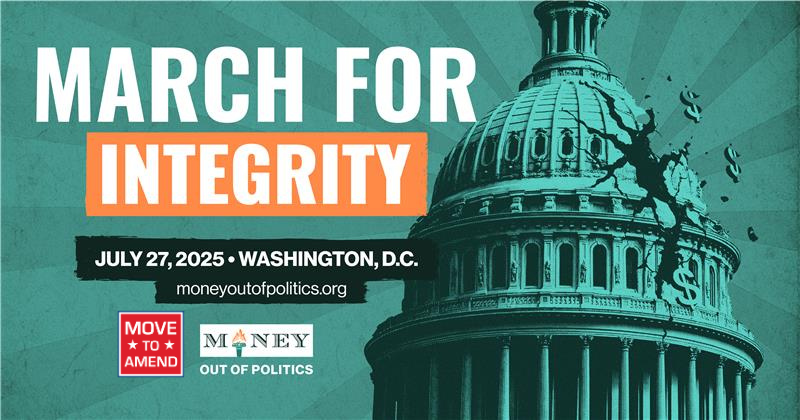
This is a crucial moment for all of us who believe that real democracy can only be achieved when corporations no longer hold constitutional rights, and when our elected officials are accountable to us—the people.
Read moreMedicaid Cuts are HERE as Part of Project 2025!
Medicaid Cuts are HERE as Part of Project 2025!
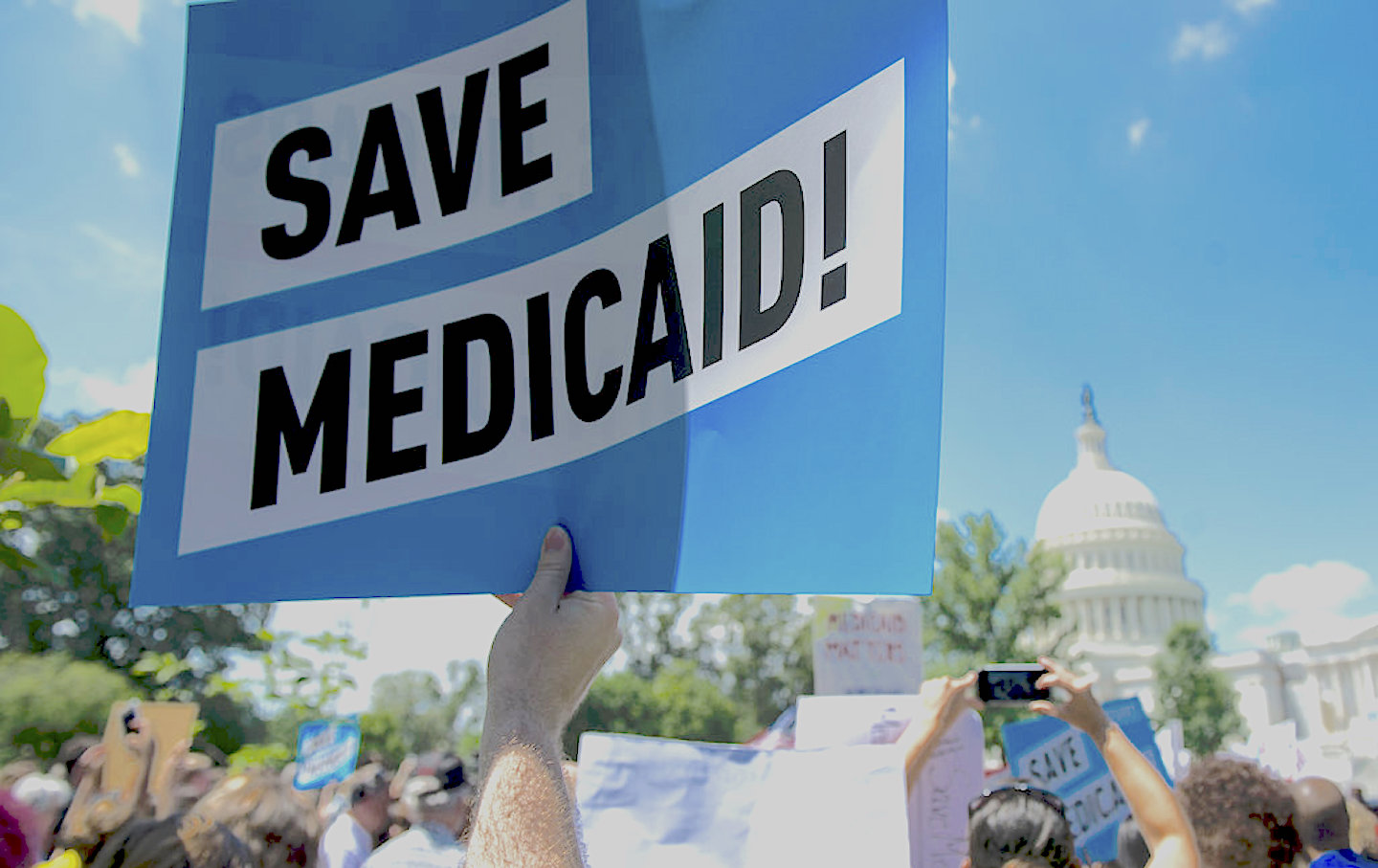
The worst-case scenario is unfolding before our eyes: The “One Big Baneful Bill Act,” which includes historic cuts to Medicaid as a core component of Project 2025, has just passed Congress and been signed into law on July 4, 2025. This is not a future threat; it is our current reality.
Read moreAll Out for the Money Out of Politics Action - July 27 in DC
July 27th, Washington D.C. (and Nationwide) - March for Integrity 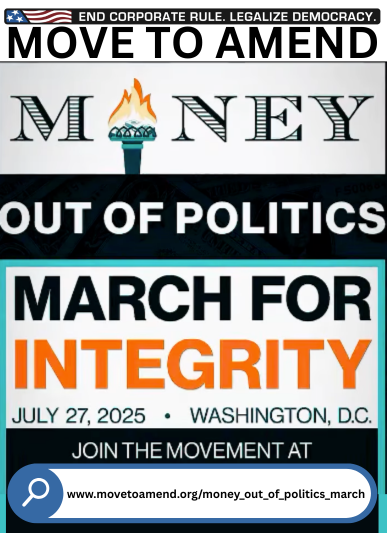
Move to Amend is proud to partner in the March for Integrity on July 27, a nationwide day of action led by the Money Out of Politics Movement.
The massive rally in Washington, D.C. and across all 50 states will demand an end to lobbyist gifts, congressional stock trading, and big money in politics - and to call for the passage of the We The People Amendment. More info on how to Pledge to March and join a local action here.
A Move to Amend representative will be among the speakers at the DC action.
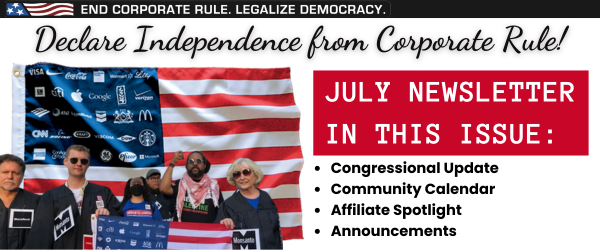
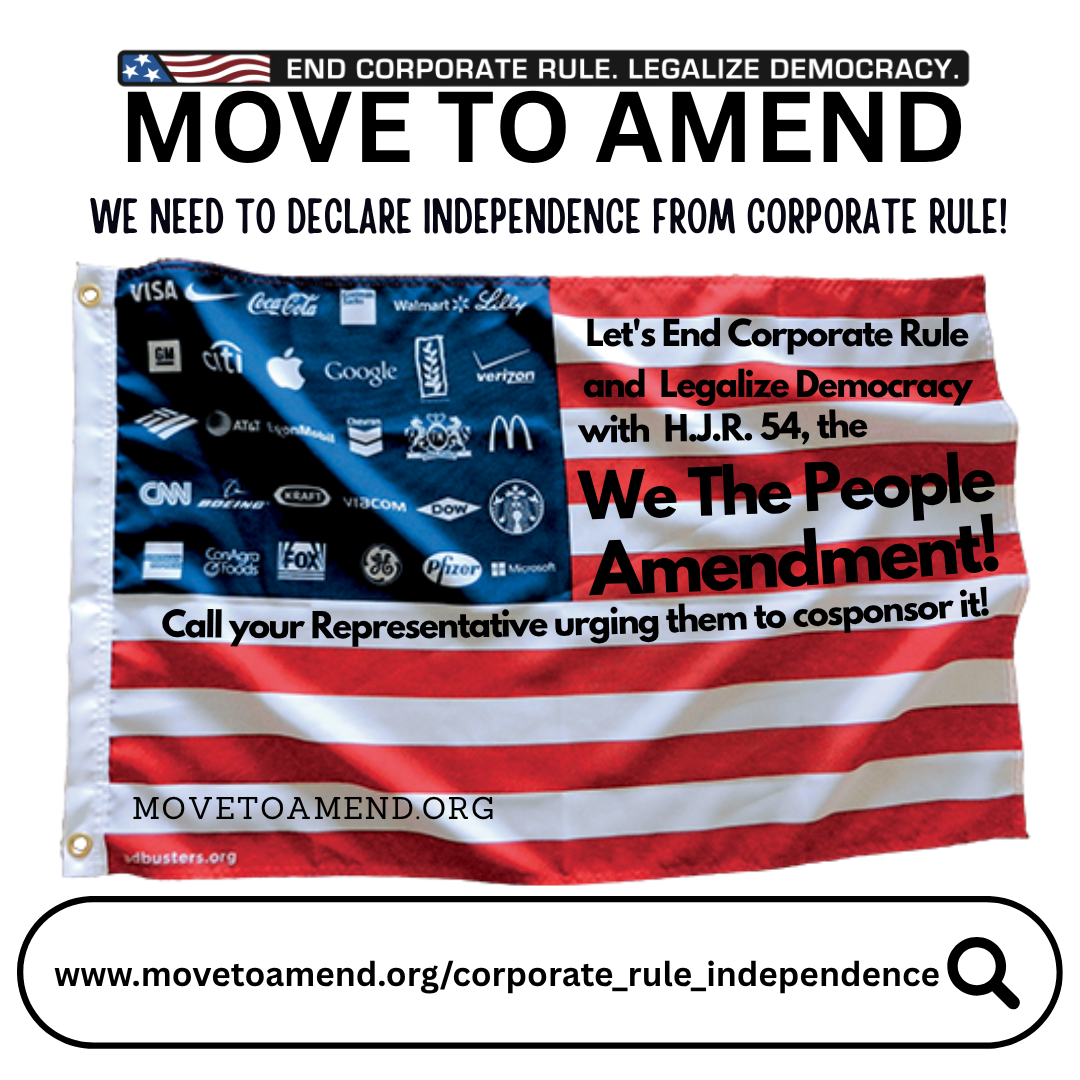
Declare Independence from Corporate Rule!
If you plan to attend formal “Independence Day” and/or family events tomorrow or this weekend, please consider this super easy, quick and effective action that helps our movement grow: copy, cut and distribute our Declare Independence from Corporate Rule ¼ page flier.
Lessons from the Colonial Revolution
Cultural Change for the We the People Amendment
[seventh in the series]
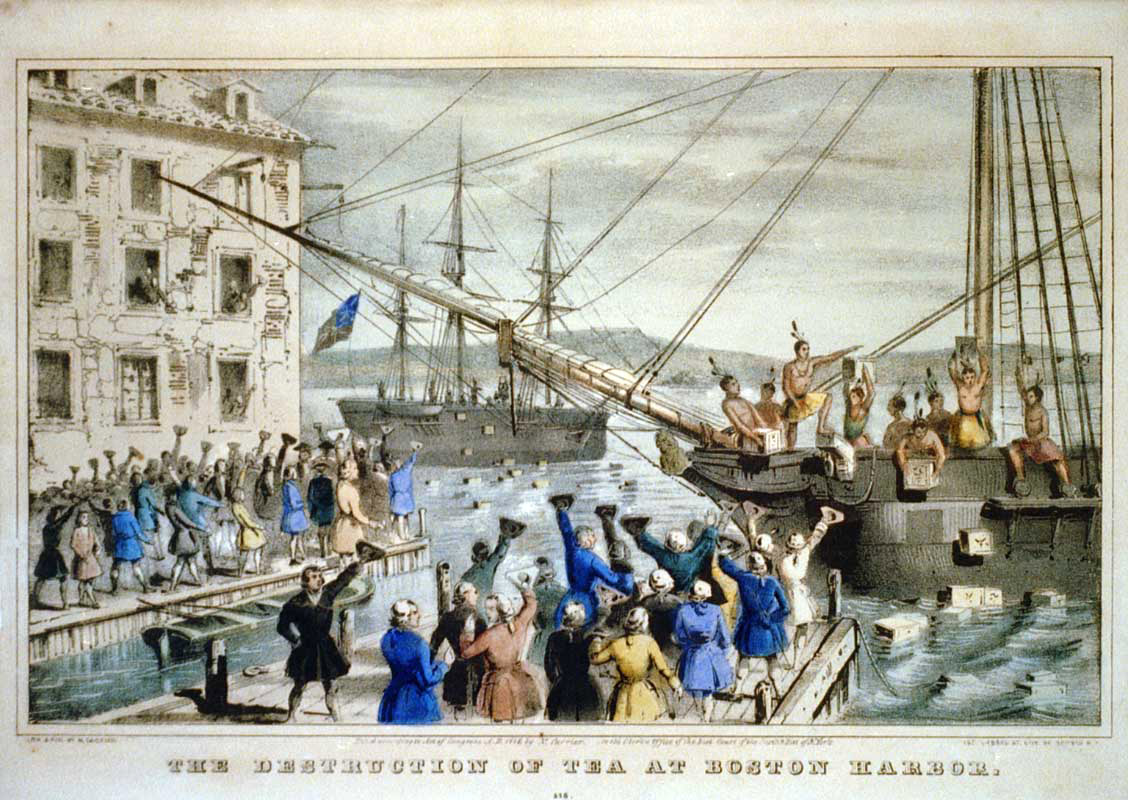
The American Revolution was the first time a European colony gained independence. The new nation, based on the principles of a republic, inspired many successive revolutions across the globe.
There was widespread acceptance, if not support, for the British monarchy in the beginning. The King or Queen was not only the head of government and the Church of England and had command of one the most powerful military forces in the world, but benefited from the widespread belief that they possessed the “divine right” to rule.
Read moreLessons from the LGTBQ+ Movement
Cultural Change for the We the People Amendment
[sixth in the series]
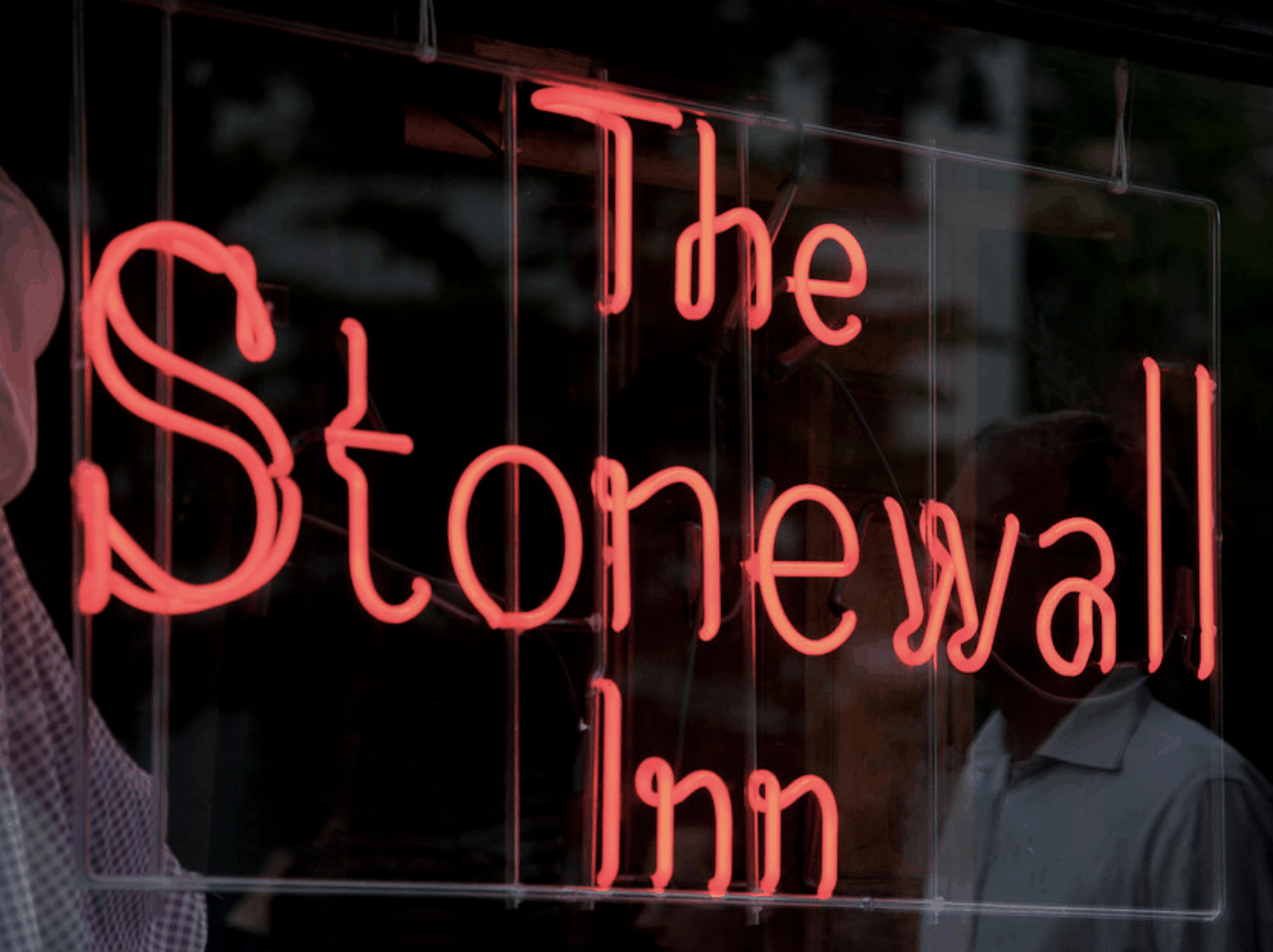
The modern LGBTQ+ movement is dated to the Stonewall Riots, a spontaneous rebellion led by queer patrons – many of them people of color and transgender – against police harassment at the Stonewall Inn in New York City in 1969.
The struggle for the dignity and rights of LGTBQs+ individuals and “against a system that criminalized their love lives and outward expression” dates to the 1950’s. The dominant religious and social narrative labeled them as perverse, sinful or mentally ill. They were victims of discrimination and violence. Being outed could mean imprisonment, loss of employment, or institutionalization. Criminalized love lives and outward expression.
Stonewall represented a collective resistance to be silent and shamed, but as human beings who sought not merely to be tolerated but who demanded liberation.
Personal transformation connected to Stonewall sparked the birth of a mass movement composed of political and cultural elements.
Read moreThis We The People Wednesday, we are celebrating a historic victory - and issuing a call to action.
This We The People Wednesday, we are celebrating a historic victory - and issuing a call to action.
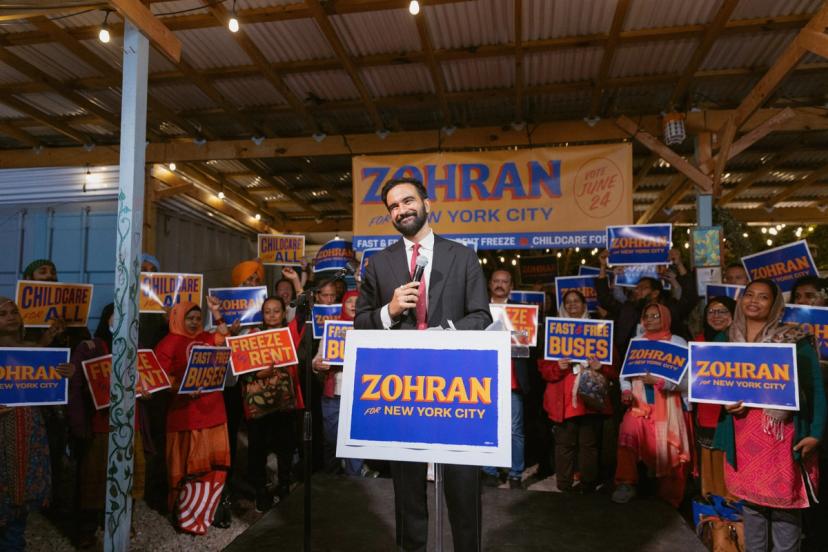
Last night, in a major upset, Zohran Mamdani defeated Andrew Cuomo and the political establishment in the NYC mayoral race - a powerful example of what’s possible when grassroots movements organize, mobilize, and fight for bold, popular demands. This was a win for the people, by the people, and it sends a clear message: we don’t have to accept billionaire rule and corporate dominance as inevitable.
But we must keep going.
Read moreTake Action to Declare Independence from Corporate Rule this July 4
“Independence Day” is coming up soon. July 4 is a Friday. There will be many public events that day and weekend: parades, fireworks, festivals, block parties, picnics, etc.
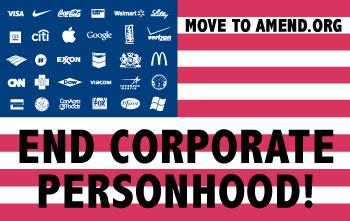
What better time to follow up “No Kings Day” protests where we called for No Kings, No Corporations: Rejecting Authoritarian and Corporate Rule with actions to Declare Independence from Corporate Rule.
Read moreHonoring Juneteenth: Reclaiming Justice, Reclaiming Democracy
On this Juneteenth, we pause to honor the end of slavery in the United States—a defining milestone in our collective pursuit of justice, liberation, and true democracy. But while Juneteenth marks freedom delayed, it also reminds us: the struggle for equality is not over.
At Move to Amend, we believe Juneteenth is not just a day of remembrance—it is a call to action.

Juneteenth symbolizes the long fight to end systemic oppression. At its heart, it echoes the very mission of our movement: to dismantle the structures that continue to uphold inequality, to ensure that democracy serves all people—not just the wealthy and powerful.
As you may know, Move to Amend is a national grassroots coalition committed to passing the We the People Amendment (H.J.Res.54) — an amendment to the U.S. Constitution that would:
- End corporate personhood, because corporations are not people and should not enjoy the same rights as living, breathing human beings.
- Make clear that money is not speech, so political power can no longer be bought and sold to the highest bidder.
Here’s why this is so relevant today:
The 14th Amendment, ratified in 1868, granted citizenship to all persons born or naturalized in the United States, including formerly enslaved people, and prohibited states from infringing upon the fundamental rights of citizens. The Amendment has been hijacked, exploited by corporations to gain rights and power never intended for them. Supreme Court cases in the 1880's set the stage for this betrayal of justice—using the language of equality to serve corporate interests.
This perversion of justice is a direct affront to the spirit of Juneteenth.
We believe reclaiming the 14th Amendment is essential to fulfilling its original promise—and to confronting the economic and political systems that continue to harm Black, Brown, Indigenous, and working-class communities. Corporate influence fuels policies that perpetuate poverty, environmental destruction, mass incarceration, and voter suppression.
Read more
