
Affiliate and Advocate Spotlight - October 2026

From Capitol Hill to Our Communities: People Power in Action
This month, our advocates took the We the People Amendment from congressional offices in Washington, D.C., to candidate campaigns in Ohio and Minnesota, the radio waves in Alaska, a public library in Georgia, and community struggles happening right in people's backyards.
Different places. Different tactics. One movement.
Read moreThe calls are getting louder: get big money out of politics. Overturn Citizens United. Amend the Constitution
They’re calling for an amendment. Let’s make sure they know about ours
|
People with national platforms are saying what this movement has been organizing around for years: we need a constitutional amendment to confront big money in politics. Jon Stewart, Dr. Abdul El-Sayed, and Pete Buttigieg are bringing this conversation to large audiences. This is an opening we have worked years to create—and we need your help turning it into support for the We the People Amendment, H.J.Res. 54. |
 |
We the People Wednesdays - September 30, 2026

|
David Keith Cobb (December 24, 1962 – September 7, 2026)
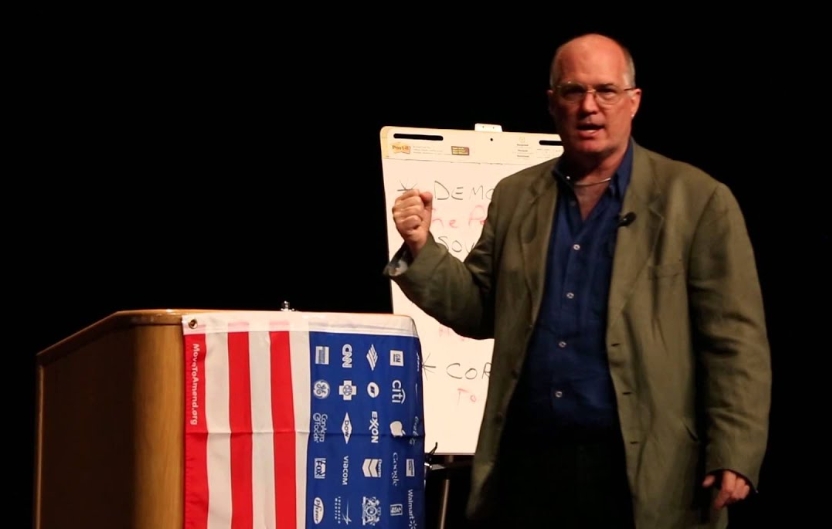
David Cobb was one of a dozen democracy activists who launched Move to Amend in 2010, as well as helping build Democracy Unlimited of Humboldt County, from which it emerged. His work challenging corporate constitutional rights grew, in part, from his involvement with the Program on Corporations, Law & Democracy (POCLAD).
For years he traveled the country on MTA-organized “barnstorming tours” -- building power and educating others about the dangers of corporate rule. David was a tireless, spirited and passionate organizer in many arenas of work, dedicated to building a society rooted in true democracy and people power, not corporate power.
Read moreConversation with Suzanne - Recording Now Available!

If you missed the conversation—or would like to revisit or share it—the recording is now available: WATCH THE RECORDING ▶️

On Constitution Day, Help Us Make "We the People" Mean All of US
On Constitution Day, we are often invited to celebrate the document signed in Philadelphia in 1787.
But democracy requires us to ask harder questions:
Who counted as “We the People” then? Who holds power now? And what will it take to make that promise real for everyone?
Remember the lives lost—and examine the powers built in their aftermath.
|



Affiliate & Advocate Spotlight - September 2026
People Power in Action
The strength of Move to Amend has always been our people. Across the country, supporters are contributing their creativity, knowledge, relationships, skills, and time to grow the movement for the We the People Amendment.
Sometimes that means organizing in your community. Sometimes it means teaching others about the Constitution. Sometimes it means bringing the movement into your union.
And sometimes, apparently, it means knitting.
Here are just a few of the people and partnerships helping build people power.
Read more
We the People Wednesdays - September 2, 2026
WE THE PEOPLE WEDNESDAY
IN THIS EMAIL:
- H.J.Res. 54 Momentum — Two new cosponsors!
- Take Action — Help us get the next one.
- Election Protection — Explore our new resources.
- Constitution Day — Two events to learn, play, and organize.

