
Recording: The Way Through: From Overwhelm, Burnout, Despair & Anger into Effective Action
The Way Through: From Overwhelm, Burnout, Despair & Anger into Effective Action

The recording is available HERE
Here are 2 other links:
- A course outline summarizing each section
- A list of Key Strategies from the workshop, plus Recommended Resources
The full self-paced course is also available online at no charge:
https://learn.radical-guide.com/courses/the-way-through-from-overwhelm-burnout-despair-anger-into-effective-action/


Move to Amend’s Position on the Transparent Election Initiative (aka “Montana Plan”)
Move to Amend’s Position on the Transparent Election Initiative
(aka “Montana Plan”)

What it is
The Transparent Election Initiative – also known as the Montana Plan or Corporate Power Reset – Its goal is to eliminate the currently unlimited corporate political campaign contributions made through Super PACs and “dark money” groups, a practice that became legal following the U.S. Supreme Court’s 2010 Citizens United v. FEC decision.
The Initiative has the potential to immediately address the root of corporate political influence by focusing on corporate charters. In the United States, corporations are legal entities (often referred to as “Artificial Persons”) created by government authority, primarily by states, to grant individuals certain powers and protections, including limited liability. Historically, corporate entities were intended to remain subordinate to the public through state legislation that defined the specific privileges and conditions necessary for conducting business, such as the ability to enter into contracts or to sue and be sued. Early corporate business charters were granted individually by state legislatures and later through general incorporation laws based on the business type. If a corporation failed to comply with the terms of its charter, the charter could be revoked, effectively dissolving the business.
Sign the Petition in support and start organizing in your state.
What it does
Read moreAffiliate and Advocate Spotlight - December 2025

From D.C. Streets to Local Power-Building
Even in a year of furloughs, political chaos, and constant “polycrisis” headlines, our affiliates and advocates have kept the We the People Amendment moving forward — in Congress, in city halls, and out in the streets. This month’s spotlight ties together a powerful moment in Washington, D.C. with the steady, gritty work happening across the country.
Read moreWilfred Codrington III program recording
It takes a Social Movement, Stupid! Lessons on how to amend the Constitution and how they apply to today’s constitutional crisis
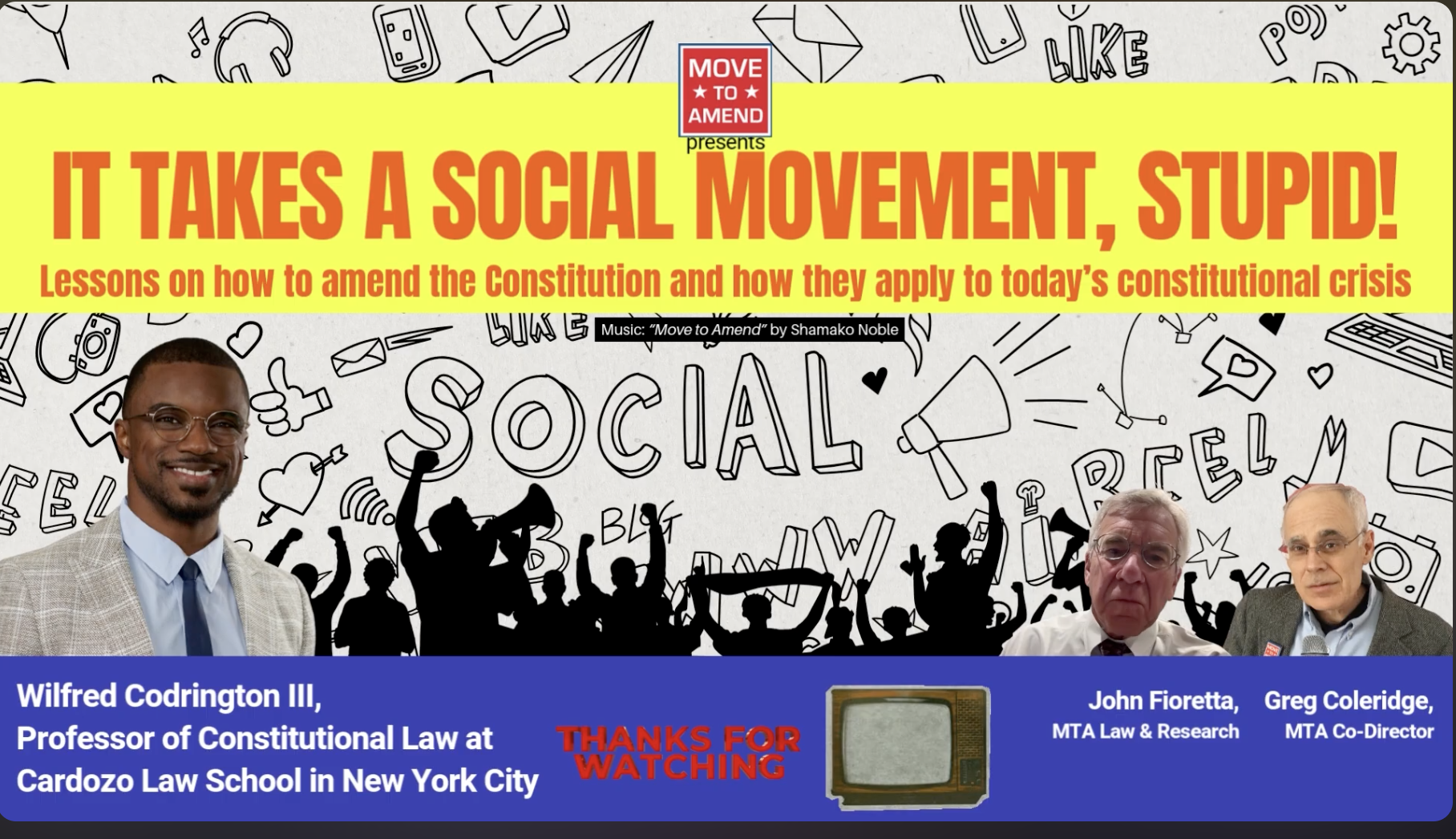
https://www.youtube.com/watch?v=SItZbnIat8w&t=4s
Listen to the dynamic presentation and engaging discussion.
Professor Codrington is co-author of The People’s Constitution: 200 Years, 27 Amendments, and the Promise of a More Perfect Union.
Please share near and far.


Move to Amend
https://www.movetoamend.org/
Lessons from the Direct Election of Senators Movement
Cultural Change for the We the People Amendment
eleventh in the series
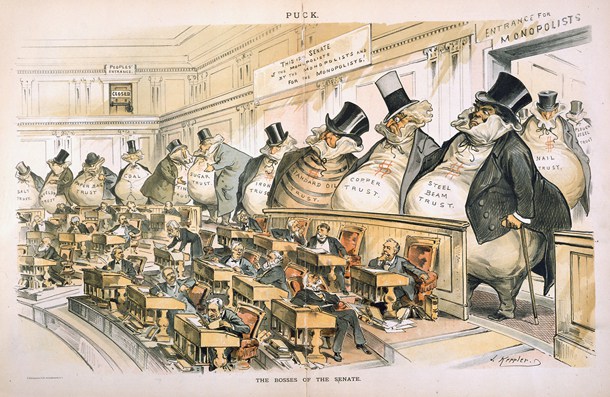
'The Bosses of the Senate' (23 January 1889). Joseph Keppler
Many U.S. constitutional amendments have addressed adding rights that were not included in the original document, revised elections for the President or changed the balance of power between the states and the federal government. The 17th Amendment is the only Amendment that deals with the structure of Congress.
The U.S. Constitution, Article 1, Section 3, states: “The Senate of the United States shall be composed of two Senators from each State, chosen by the Legislature thereof, for six Years; and each Senator shall have one Vote.”
The effort to allow voters to directly elect U.S. senators was initially proposed during the constitutional convention by James Wilson, a lawyer from Pennsylvania who would later become one of the original Supreme Court Justices. He was the lone supporter. The framers thought that senators chosen by state legislatures would create legislators who would, supposedly, be more deliberate and independent when considering issues.
The issue resurfaced decades later as several U.S. Representatives introduced the Amendment in the early 1850’s. Future President Andrew Johnson, while serving as a Congressperson, proposed the Amendment in 1857.
The momentum for the popular vote for senators increased during the next half-century over two issues: electoral deadlocks and corruption.
Read moreMadiba Dennie interview recording
Our Right and Duty to Create an Equitable Democracy & Constitution
Move to Amend
https://www.movetoamend.org/


Affiliate Spotlight November 2025

October was a month of grit, creativity, and people-powered progress across the Move to Amend network. From the Midwest to the Deep South, our affiliates and advocates are proving once again that when the message is clear and the mission is just, people are eager to join the fight to end corporate rule.
Read more
