
Cultural Change for the We the People Amendment
[seventh in the series]
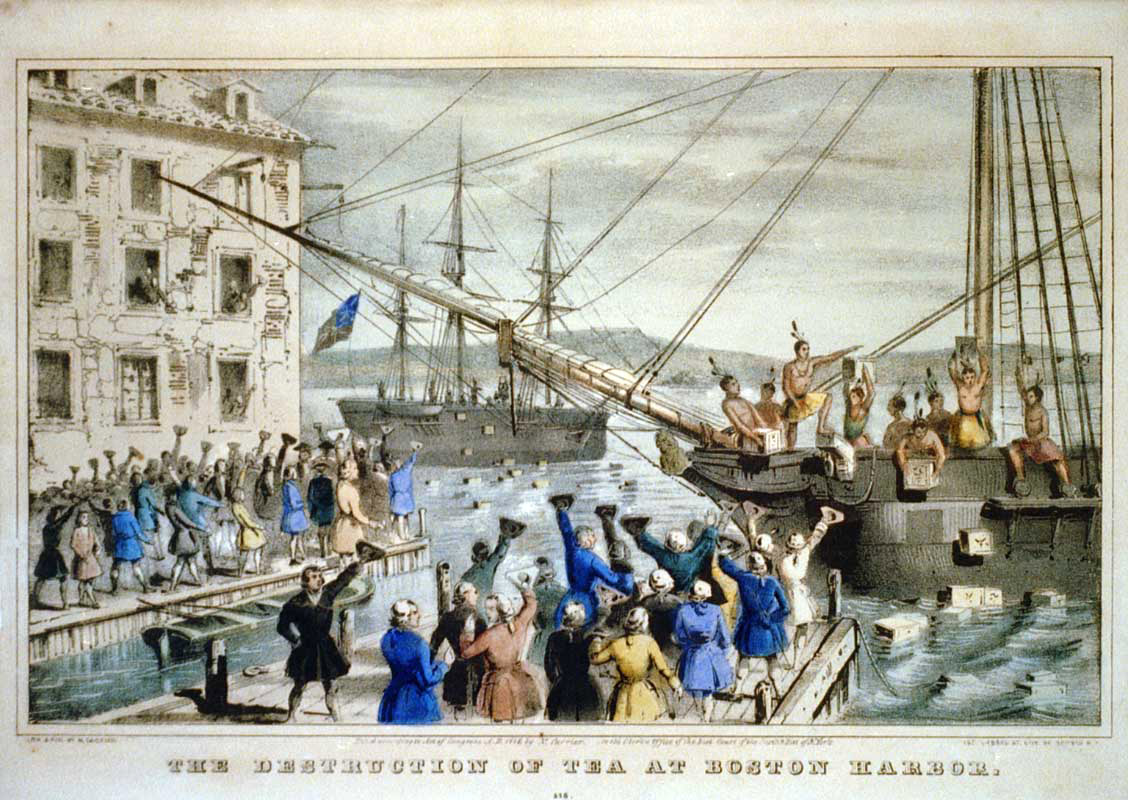
The American Revolution was the first time a European colony gained independence. The new nation, based on the principles of a republic, inspired many successive revolutions across the globe.
There was widespread acceptance, if not support, for the British monarchy in the beginning. The King or Queen was not only the head of government and the Church of England and had command of one the most powerful military forces in the world, but benefited from the widespread belief that they possessed the “divine right” to rule.
Grievances among American colonists grew over unjust economic and political conditions imposed by the Crown. Many of these originated from the structures of the 13 colonies, which were chartered or licensed by King George III. Some were joint stock corporations like the Massachusetts Bay Company and Virginia Company; other charters were granted to individual proprietors. These colonial charters were profit-making ventures that enriched the monarchy and British investors.
The rising animosity toward the Crown’s policies, military presence in the colonies, and chartered corporations delegitimized the monarchy. A growing mindset that King George III had no “divine right” to rule. The monarch was simply a humanly-created form of paternalistic governance that failed to meet the felt needs of colonists and, therefore, must be resisted. This “mental decolonization” was the essential first step toward independence.
Colonial newspapers, Thomas Paine’s Common Sense and the Declaration of Independence were integral tools in shifting public consciousness. A culture of mass disobedience developed, fueled by numerous nonviolent actions as described in The Power of the People: Active Nonviolence in the United States:
- Petitioning and other conventional methods of protests and persuasion.
- Noncooperation, such also took the forms of refusal to pay taxes as mandated by the British Stamp Act (which was later repealed).
- Boycotts of taxed British goods (i.e. tea, paint, paper, and glass) under the Townshend Acts (largely repealed).
- Trade boycotts, including the refusal to export tobacco and timber to Britain.
- Consumer self-reliance, choosing locally made goods over British imports.
- Political theater, such as a mock funeral where 500 people paraded an effigy of Liberty in a coffin, but before burying it found it was still living.
- Economic resistance where women made homespun clothes as a symbol of economic self-reliance (similar to what Gandhi did more than a century later in India)
- Monetary independence with the colonies printed “Continentals” – their own currency to reduce their economic dependence on the lack of British money.
- Creation of parallel institutions. Colonial refusal to obey British colonial structures led to nonviolent seizure of existing institutions (e.g. judicial systems) or creating new governing bodies/political congresses at the local, country and provincial levels that sought to replace the political and judicial functions of the “official” British government. The most famous of these were the Committees of Correspondence and the Continental Congresses.
These and other actions deepened a shared belief and desire for independence, sense of solidarity, and greater common identity – as well as building economic and political self-reliance and the beginnings of political self-governance. The feeling grew that Crown Corporations (companies originally created by the British “Crown”) should be “democratized” or “constitutionalized” with, for example, the Province of Massachusetts Bay (the successor to the Massachusetts Bay Company and other New England colonies of the time) becoming the Commonwealth of Massachusetts in 1780.
The psychological and cultural transformation of the colonists, along with the effectiveness of widespread nonviolence resistance, resulted in a sense of independence before the first shot was fired in Concord in 1775. `
Yet once war broke out, participation in nonviolent resistance sharply declined. Women, children and many men were no longer able to participate. Violence narrowed the scope of participation and shifted power into fewer hands. These restrictions surely had a role in the subsequent restrictions in the formation of the new government that were dominated by elite white men of property.
Moral or religious roots weren’t the impetus for the nonviolent campaigns. It was the reality that the British had more military might. It was a huge gamble to take up violence compared to continuing widespread nonviolent non-cooperation.
The Continental Army, violent riots, and even the Boston Tea Party and its property destruction alienated some colonists (e.g. driving them to support the British); as well as many British citizens who had earlier sympathized with the colonial cause and pressured the British government to give up the colonies.
As John Adams said:
“A history of military operations is not a history of the American Revolution. The revolution was in the minds and hearts of the people, and in the union of the colonies; both of which were substantially effected before hostilities commenced."
Not all colonists were the same
It’s critical to understand that not all colonists were the same and not all their motives were authentically “democratic.”
Not all colonists supported political independence. It’s estimated that colonists were split between independence, remaining part of the British empire, and neutral.
Not all colonists for independence shared the same grievances or shared the same values. The poor, laborers and most artisans favored self-determination to address their own economic miseries. Elite merchants, lawyers, and officials often aimed to replace British rule with their own control, offering token benefits to the poor while feeding class resentment against royal authorities out of fears that they would be targeted by “mob” attacks.”
A “democratic republic” was just the more updated way to maintain elite power. The Constitution reflected this. Founders feared real democracy. Washington, Hamilton, Jefferson and Madison all spoke out against the fear of majority rule. John Jay, first chief justice of the Supreme Court may have stated it most succinctly when stating “those who own the country ought to govern it.”
Not all colonists supported real solidarity with one another. Poor whites often formed alliances with poor blacks and even indigenous people. This terrified the minority elites. Race was created as a construct to separate the white from black (poor whites given greater rights, such as voting). Blacks were discriminated against in the north and enslaved in the south. Indigenous people were defined as savages in the Declaration of Independence, were increasingly killed and had land stolen. Women had no legal identity as human beings and were considered to be under the legal control of their husbands.
Lessons for Move to Amend
1. Decolonize our minds. The subjects of the British Empire globally were conditioned to believe the British monarchy was “divinely inspired.” The empire was too powerful. There was no alternative, It was not worth organizing against and worth organizing for a better future. The American colonists stopped believing the myth, based on the failure to address their economic and political needs. They were the first to “decolonize” their minds and seek self-determination – as vastly imperfect as was with virtually all power help by propertied white men.
We live today, and more evident at this moment than in at least several generations, in a system of elite control. Call it what you will – oligarchy, plutocracy, fascism, corpocracy. Maybe it’s all of them. The monarchy has been replaced by business corporations and a relatively small handful of incredibly rich individuals that have largely captured all three branches of government, as well as what is often considered the “Fourth Estate” or “fourth branch of government”: the media.
Nothing will ever change unless there is widespread public realization that We, the People, aren’t in charge, we’ve never been in charge, we’ve never lived in an authentically inclusive democracy/democratic republic, and that our institutions (e.g. U.S Constitution at the top of the list) were designed to protect the “tyranny of the minority” from the majority. The good news is that there is growing and widespread recognition of this truth, even crossing the political spectrum based on the growing realization that our institutions aren’t meeting the basic needs of the majority of people, and are completely incapable of ensuring a livable world. Just as importantly, nothing will change unless people believe change is possible, realistic and, if we organize inclusively, inevitable.
Move to Amend has an important role to play in offering ongoing education on the history of social movements (e.g. including this series) and skill-building training to organize for fundamental change and in continuing to build a culture for authentic democratic change.
2. Develop a collective vision of a better future. Virtually all colonists felt oppressed, though in many different ways. Many wanted liberty from the British. There was enough of a common language, story, and strategy to make it work, resulting in a plurality of people organizing for independence – despite blacks, indigenous and women not included. Move to Amend needs to not only promote the We the People Amendment as one of several visionary changes, but to better uplift the positive political, economic and environmental changes if it was enacted.
3. Resist cooptation. The men of property in the colonies who wanted independence to become the new rulers worked to manipulate popular language and demands. They supported property destruction of British leaders in the colonies, but downplayed their own privileges. The joint vision of political independence turned into a Constitution produced exclusively by white men of property who met in secret to produce a document that in many ways protected the rights of property over people (i.e. The Bill of Rights was not part of the originally drafted document).
The effort today to form an inclusively democratic and independent democracy movement is incredibly challenging. External influence limits the agendas of non-profit groups working for systemic change. Business corporations, the super rich, major foundations, political parties, and governments play a major role in funding. The tax code contains “political” and “electoral” activities. Move to Amend has always focused on being politically and economically independent – intentionally choosing to rely on the majority of our support from individuals and small family foundations.
4. Act in solidarity. Colonial elites were terrified of poor whites, indigenous people and free blacks or escaped slaves joining forces. They worked deliberately to separate these groups. The same is true today. Whether real or concocted, differences are used to polarize and pit races, genders, ethnicities, religions and, even to a certain extent, class from examining common problems and exploring ways to come together to create power. Immigrants at the moment top the list.
Move to Amend has always committed to address oppression in all its forms and to work for genuine democracy – for the very first time – with the We the People Amendment being the first step. We must expand our efforts to work in solidarity – particularly those who have been historically marginalized and now being especially targeted.
5. Build nonviolent power. The story of the Colonial Revolution has for the most part always been described between one battle and another. Buried has been the truth of how mass nonviolent action de facto won independence before 1776. Move to Amend will continue to lobby and engage in symbolic protests, but we must also explore the power that comes from engaging in mass actions of noncooperation – including civil disobedience – that has had a history of effectiveness historically in this country and around the world as an element of those striving for justice, peace and democracy.
----------
Political conditions today are in many ways very different than 250 years ago. The threat and implementation of authoritarian power isn’t from a ruler across the ocean. It’s domestic. But it’s not only by the Trump administration. Long before he arrived and long after he’s gone, the power to fundamentally shape, if not dictate, public policies will remain with corporate entities and the super rich. Enactment of the We the People Amendment (HJR54) is one vital piece of reigning in fundamentally undemocratic power.
In solidarity
Greg Coleridge
National Co-Director

