
Declare Independence from Corporate Rule – Part 5
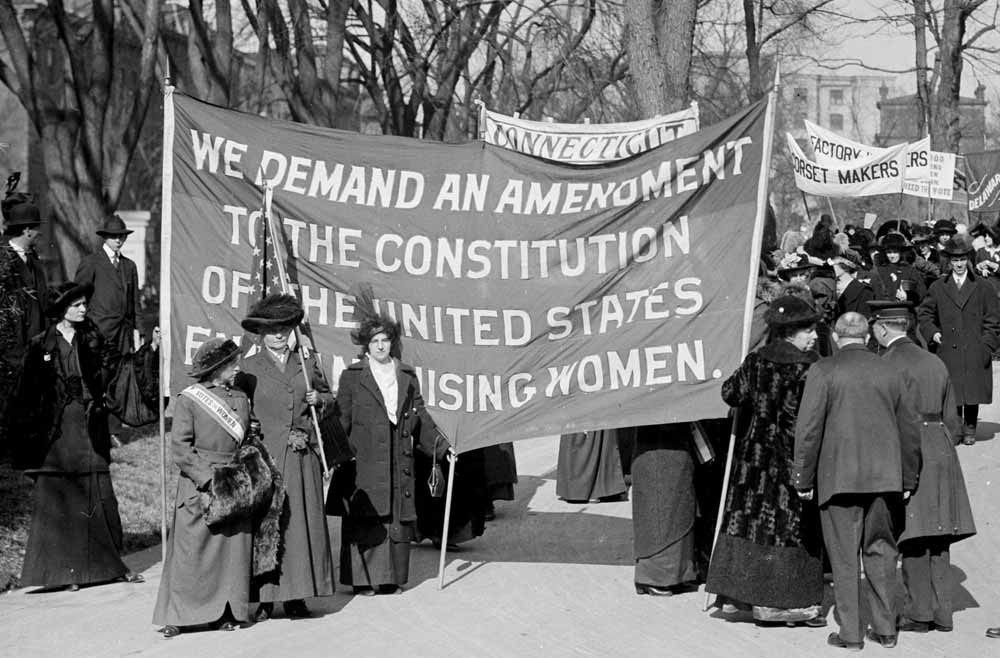
Women Declared Their Political Independence—and Changed the Constitution
August 18, 1920, Tennessee became the 36th state to ratify the 19th Amendment, clearing the final constitutional hurdle needed to prohibit denying citizens the vote on the basis of sex.
|
It was not a gift from Congress, the courts, or the political establishment. Women organized for generations to force the nation to recognize a fundamental democratic truth: a government cannot claim to represent people it excludes from political power. The struggle took more than 70 years after the 1848 Seneca Falls Convention, known as the launch for Women's Suffrage Movement. Suffragists marched, organized, published newspapers, delivered speeches, petitioned lawmakers, endured arrests, and faced violence and public ridicule. They challenged laws, cultural norms and institutions that treated women as dependents rather than full political participants. Their victory also demonstrated something powerful: the Constitution is not untouchable. When it protects an unjust system- or fails to protect the people- organized movements can change it. |
The 19th Amendment Was a Beginning, Not the EndThe 19th Amendment declared:
But the promise of the amendment was not equally realized. Black women throughout the South continued to face poll taxes, literacy tests, intimidation, violence, and other tools of white supremacy. Native American women were denied citizenship until 1924, and even then many states continued preventing them from voting. Discriminatory citizenship laws excluded many Asian American women. Women living in U.S. territories still do not have equal voting representation in Congress or a meaningful vote for president. The 19th Amendment broke one enormous barrier, but it did not dismantle racism, colonialism, economic inequality, or every structure designed to concentrate political power. That unfinished history matters today. The Right to Vote Is Not Enough if Wealth Can Overrule UsWomen now have the constitutional right to cast a ballot. But billionaires and corporations possess vastly greater power to determine which candidates are viable, which issues receive attention, which laws are written, and whose voices government officials hear. Corporations cannot enter a voting booth. Yet judicial decisions granting artificial entities constitutional rights—and treating political spending as protected speech—allow them to exert enormous influence over the entire political process. A nurse, teacher, caregiver, or minimum-wage worker may have one vote. A corporation can spend millions influencing elections, lobbying lawmakers, funding political organizations, shaping media narratives, and fighting regulations intended to protect workers, families, and communities. That is not political equality. Corporate rule has especially severe consequences for women. Wealthy interests spend heavily to influence policies governing wages, healthcare, reproductive freedom, paid leave, childcare, workplace protections, environmental health, housing, and education. Industries can use their economic and political power to block reforms that most people need and many voters support. Winning the ballot was essential. But democracy remains incomplete when concentrated wealth can overwhelm the voices expressed through those ballots. Every Expansion of Democracy Has Required a MovementThe suffrage movement offers a lesson far larger than a single anniversary. Its organizers did not accept the argument that constitutional change was too difficult. They did not settle for asking powerful institutions to voluntarily surrender their control. They exposed a fundamental contradiction between America’s democratic promises and its political reality—and organized until that contradiction could no longer be ignored. Today, we face another constitutional contradiction. The opening words of the Constitution are “We the People.” Yet corporations have been permitted to claim constitutional rights intended for human beings, while money has been elevated into constitutionally protected political speech. The result is a system in which legal equality at the ballot box coexists with profound inequality in political power. Defending the Vote, Ending Corporate RuleTo carry this work forward, Move to Amend is launching a national Voter Integrity Program built on a simple principle: the right to vote means little if people are prevented from exercising it—or if corporate money overwhelms their voices after their ballots are cast. The program will connect voter protection with the broader struggle for political equality. Working alongside affiliates, volunteers, and partner organizations across the country, Move to Amend will help:
These are not separate struggles. Voter suppression determines who can participate, while corporate rule determines whose voice carries the greatest weight. One excludes people from the ballot box; the other allows corporations and billionaires to overpower them within the political system. More than a century after the 19th Amendment was ratified, the work of building an inclusive democracy remains unfinished. Move to Amend’s Voter Integrity Program will help defend the victories earlier movements won while organizing for the structural change necessary to make every vote—and every person’s voice—matter. Our Next Declaration of IndependenceThe We the People Amendment, H.J.Res. 54, would confront this crisis at its constitutional source. It establishes that constitutional rights belong to natural persons—not corporations or other artificial entities—and requires government to regulate political contributions and spending so that all people, regardless of wealth, have access to the political process. This constitutional transformation would carry forward the unfinished work of every movement that has fought to expand political equality and place governing power in the hands of the people. Women did not win the vote because the system corrected itself. They won because ordinary people organized across generations and demanded a constitutional transformation. Now it is our turn. We must declare our independence from a political system in which corporations possess constitutional rights, wealth is treated as speech, and billionaires can exercise more political power than millions of people combined. The struggle for women’s suffrage reminds us that democracy is not simply inherited. It must be expanded, defended, and rebuilt by every generation. The vote belongs to the people. Constitutional rights belong to the people. Our government must belong to the people. Join Move to Amend in demanding the We the People Amendment and help declare our independence from corporate rule. |
|
|
|

|
|
|
Move to Amend |


